
Outdoor kitchen planning in Orange County: space, utilities and permits
Plan the utilities first, then the grill. In most Orange County backyards, the cost and the timeline of an outdoor kitchen are decided by where gas, power and water have to run, not by the appliances you pick.
Start with how you cook
Before you look at grills, answer three questions: how many people you usually cook for, what you cook most, and whether you want to prep outside or carry food out from the house. A family that grills twice a week needs a very different layout from a host who wants a sink, a fridge, a side burner and seating for twelve.
Write the answers down. They decide the size of the island, the appliances and, most of all, the utilities.
Give it enough room
For a grill and a working prep counter, plan on a footprint of about 8 by 8 feet, with roughly 2 feet of clear walkway at each end so people can move around the cook. Add space for every extra appliance and for seating. Put the kitchen where smoke blows away from doors and windows, and where the cook can still see the table or the pool.
Utilities set the budget
This is the cost most people miss. A natural gas grill means running or extending a gas line. A sink means a water supply and a drain. A fridge, lights or a TV mean new electrical circuits, usually with outdoor-rated outlets. Each of those is trade work, and each one adds trenching, materials and inspection time.
If your budget is tight, the cheapest kitchen is the one that sits closest to the utilities you already have. A propane grill and a simple counter can come first, with gas and water added later if you plan the island for them now.
Outdoor kitchen planning numbers
| Item | Plan for |
|---|---|
| Grill plus prep area | About 8 x 8 ft minimum |
| Walkway at each end | About 2 ft clear |
| Standard counter height | 36 in |
| Bar-height counter | 42 in |
| Landing space beside the grill | At least 12 in each side |
| Planning steps on our checklist | 9 |
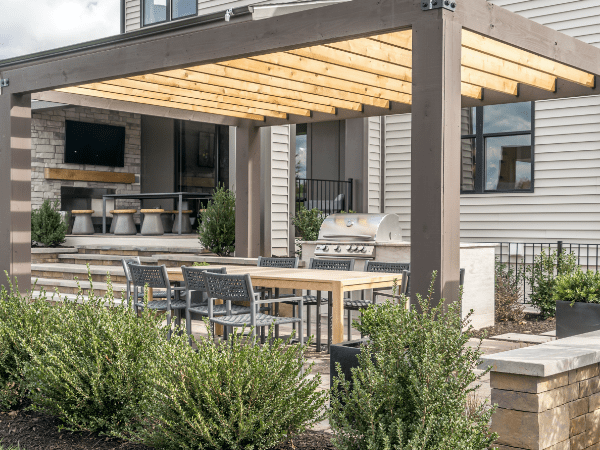
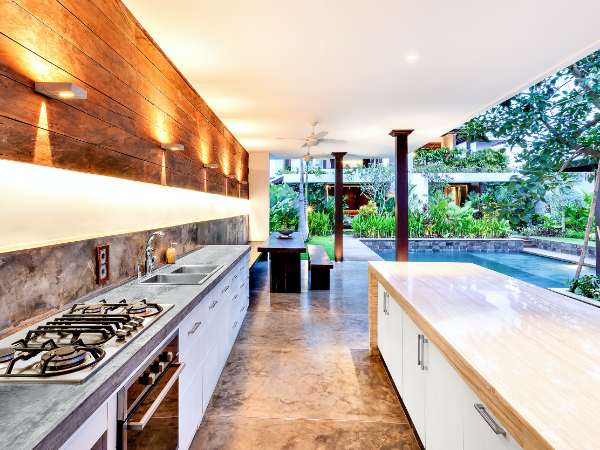
The 9-step checklist we walk through
- Pick a type. A grill island, a full kitchen, or a kitchen under a cover.
- Measure the space. Include walkways and seating, not just the island.
- Permanent or portable. Built-in islands last longer. Portable pieces cost less up front.
- Set a budget. Put utilities and any cover in the number from day one.
- Match your cooking style. Gas for quick weeknights, charcoal or a pizza oven for flavor.
- Plan for the weather. Shade, wind and afternoon sun all matter in a Southern California yard.
- Plan the upkeep. Covers for the grill and sealed counters keep it looking new.
- Choose the materials. Concrete, stone and tile hold up well outside.
- Plan the permits. See below.
What usually needs a permit
Permits are usually required for the parts of an outdoor kitchen that involve trade work: new gas lines, new electrical circuits and plumbing. A patio cover or other roof over the kitchen often needs its own building permit too. Rules differ from city to city across Orange County, so check with your city’s building department before work starts. If you live in a community with an HOA, you will likely need their architectural approval as well.
When we build an outdoor kitchen, we pull the permits and make sure the work is done to code, so you don’t have to chase inspectors. See what goes into our outdoor kitchens and the patio covers that often go over them.
Quick answers
How much space do I need for an outdoor kitchen?
Plan on about 8 by 8 feet for a grill and prep counter, plus about 2 feet of clear walkway at each end. Add room for every extra appliance and for seating.
Do I need a permit for an outdoor kitchen in Orange County?
Usually, for the parts that involve trade work: gas lines, electrical circuits and plumbing, and often for any cover built over the kitchen. Rules vary by city, so check with your city's building department. An HOA may also need to approve the design.
Should I choose a gas or charcoal grill?
Gas lights fast and holds a steady temperature, which suits weeknight cooking. Charcoal gives more smoke flavor but takes longer to heat up. Many people pair a gas grill with a pizza oven or smoker.
What countertops work best outside?
Materials that handle sun, heat and water, such as concrete, stone and tile. Cement pavers are a durable, low-maintenance option too.
Ready to start your project?
Call us or send a message and we’ll come out with a free, accurate estimate.